

The Wall Street Journal recently wrote about the complicated financial lives of dentists. Reading the article, it was hard not to see the similarities in the financial challenges that we face as lawyers.
Among America’s swelling ranks of moderate millionaires, few have more complex personal balance sheets than dentists.
They earn high incomes, have built valuable businesses and have benefitted from the rising stock market of the past decade and a half. But they often graduate with significant student loan debt and spend years tying up money in building their practices.
High incomes?
Years of effort building our careers?
Significant student loan debt?
This article could just as easily been written about lawyers.
The article continues:
Entering their professional ives in a financial hole often leaves an indelible mark on the way dentists invest. Some take on risky self-directed investments, while others are forced to minimize their retirement savings until they pay off other obligations.
This article serves as a reality check for anyone thinking that they’ll never have to worry about money if they simply obtain an advanced degree. To the contrary, choosing to take on student loans is a major decision that will impact your personal finances for years.
The article also illustrates one of the most difficult money decisions that lawyers have to make: should we invest while in debt?
Today, we’ll explore why I think it’s a good idea to start investing even if you’re paying off debt.
It’s good to pay off debt and it’s good to invest.
Same as the dentists featured in the WSJ article, It’s not uncommon for lawyers to have hundreds of thousands of dollars in debt.
I regularly get questions about investing while in debt from law students who take my personal finance class. By the way, it’s not just lawyers with student loan debt who face this question. Maybe you have mortgage debt, medical debt, or consumer debt. Perhaps you’ve used a HELOC to buy investment property like I have.
Regardless of the type of debt, I understand the urge to eliminate that debt as quickly as possible. Still, is it the best idea to avoid investing for the future until that debt is gone?
I don’t think so.
Obviously, we know two things to be true at once:
Debt can be bad.
Investing can be good.
So, should we focus on eliminating the bad thing or doing more of the good thing?
It’s not easy to serve two masters at once. How do we plan for the future while worrying about past debts?
The way I see it?
You don’t have to choose only one door to walk through.
You can invest while in debt. But, striking the right balance can be tricky.
The choice to pay down debt or invest for the future is tricky.
Whatever the case may be, the choice to pay down debt faster or invest for the future is tricky.
For people feeling the heavy burden of debt, the idea of investing for some future goal can seem a little bit comical. I completely understand.
If you’re facing monthly debt payments for the next 10 years, you may not be ready to think about retirement 50 years from now.
Trust me, I get it.
I know firsthand how heavy debt can feel.
In my 20s, I had both student loan debt and credit card debt. It was not fun to carry that debt burden. I’ll never forget the incredible feeling of accomplishment when I paid off those debts. I felt so much lighter.
I now have HELOC debt that I’m focused on paying off. That HELOC debt stems from buying five properties in seven years. My real estate portfolio is now exactly where I want it to be, so I’ve shifted from acquisition mode to debt-reduction mode.
Just about every day, I think about how good it’s going to feel to have that HELOC debt paid off.
The point is: you don’t have to convince me why you may want to focus on paying off debt. I understand completely.
However, I think it’s worth considering the advantages of investing at the same time you’re paying off debt. You don’t have to go all-in on paying off debt or all-in on investing. You can strike a balance.
Four main reasons to invest while in debt.
There are four main reasons to consider when thinking about whether you should invest even though you’re in debt.
If you’re not investing at all because you’re focused on debt, these four reasons should give you something to think about.

1. Invest while in debt because of the psychological side of money decisions.
It feels good to see your investment accounts grow. This is especially true when you are accustomed to looking at huge debt balances on your laptop or phone screen.
Yes, it feels good to see those debt balances shrink. It also feels really good to see your investment accounts grow.
As a lawyer, you work hard for your money. You spend a lot of hours away from home so you can work and make a living. You deserve to experience the fruits of your labor.
When your career is stressing you out, it can be very uplifting to observe a growing investment account balance month-to-month.
2. Invest while in debt to develop the habit.
It’s important to get in the habit of investing as early as possible in your careers. Once you start investing, even if it’s only $25 per month, you are creating a habit. This is the type of habit that will pay off immensely in the long run.
Humans have a tendency to resist change. That’s why it’s difficult to break bad habits. This tendency also works in our favor when we have established good habits, like investing. We tend to just keep doing what we’ve always done.
When you’ve established the good habit of investing, it’s easy to increase your contributions as you earn more money. The same is true when you’ve eliminated all your debt. You can easily use the money you had been putting towards debt for your already-established investments.
That’s because your accounts will already be set up. All you need to do is increase your monthly investment contributions.
This makes it easier to solidify and benefit from the good habit you’ve cultivated.
3. Invest while in debt because of compound interest.
Compound interest is the most powerful force in all of personal finance. The earlier you start investing, the more benefit you’ll get from compound interest.
You can check out more about the power of compound interest in my post on investing early and often.
I also encourage you to use the Think and Talk Money Compound Interest Calculator to see for yourself how even small, consistent contributions will have a major impact on your finances in the long run.
4. Invest while in debt because of the math.
Even though money decisions are closely connected to our emotions, the math of investing can be hard to ignore. If you prefer to make money decisions primarily based on the math, here’s what you can do.
We’ve talked before about how the S&P 500 has historically earned an average annual return of 10%. Of course, there’s no guarantee that you will earn 10% if you invest. You may earn less or you may earn more. Still, based on the historical data, it’s a reasonable estimate.
You can then compare that 10% return to the amount you’re paying in debt interest.
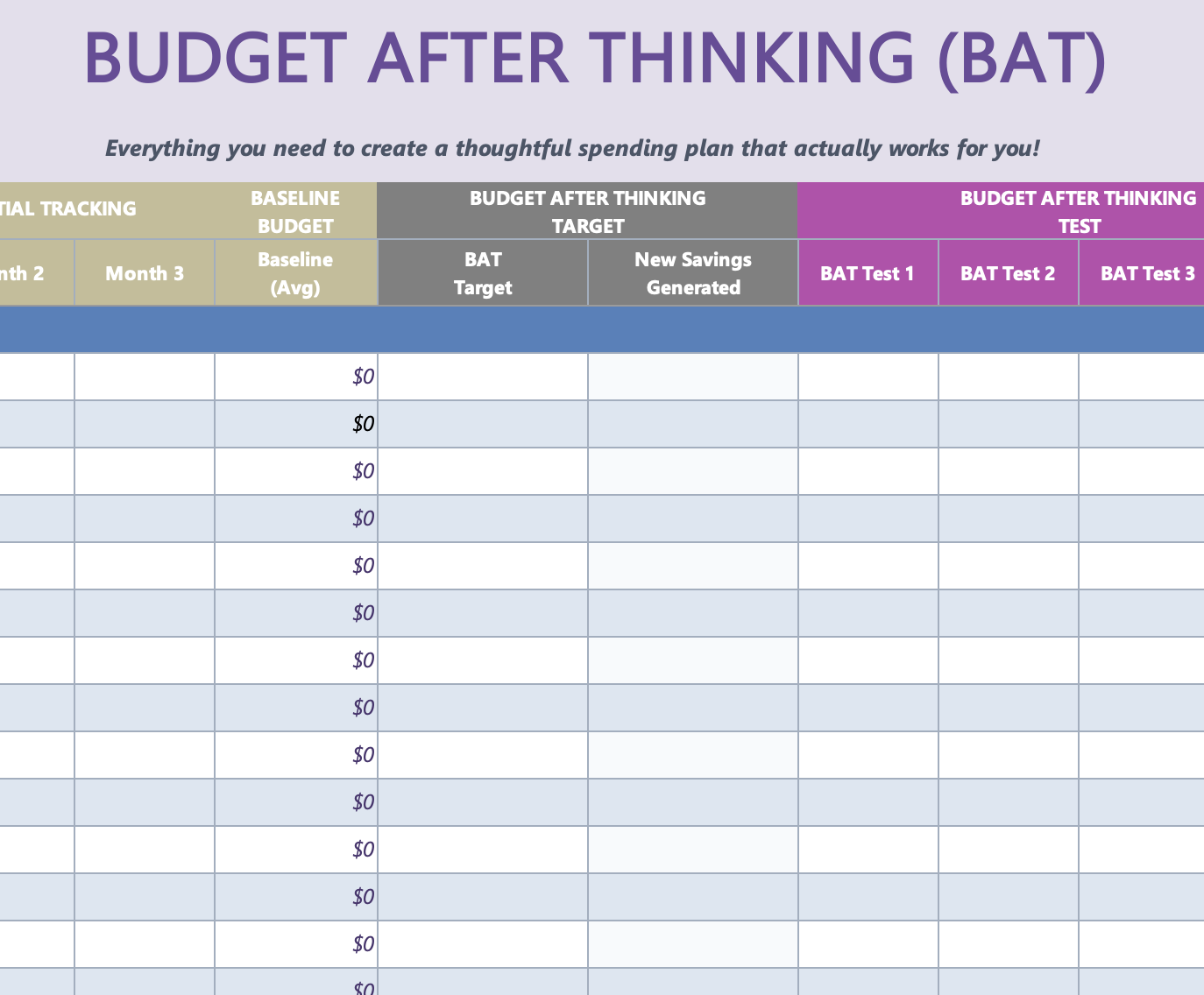
For example, let’s say you created a Budget After Thinking that opened up an extra $200 in your monthly budget to allocate towards either student loan debt or retirement.
You’ll next want to look up your current student loan interest rates. For illustration purposes, the current interest rate for undergraduate federal loans is 6.39%. The current interest rate for graduate and professional students is 7.94%.
Then, visit the TATM Resource Library and use a calculator to help make your decision about whether to invest the $200 or put that money to debt.
If you put the money to debt, you’ll obviously pay off that debt faster. You can read more about how to easily do these calculations in my post on Debt Snowball vs. Avalanche.
Likewise, you can use an investment calculator to see how much that $200 will grow in an investment account over the long run. You can see how to do these calculations in my post on risk as the cost to invest.
Armed with the math, you can then make a decision that makes the most sense to you.
You may value getting out of debt faster. Or, you may be motivated by the larger balance in your retirement account.
It may come down to how high the interest rate is on your student loans. The higher your interest rate is, the more sense it makes to prioritize paying off that loan.
The point is that there are mathematical reasons to start investing even while paying off debt.
One final note about the math: your student loan interest rate is effectively locked in (unless you have a variable rate). On the other hand, your investment return rate is only a projection. That makes a difference.
It means that when you are in debt, you are guaranteed to be charged interest every month. In contrast, there are no guarantees you will make money when you invest. As you make your decisions, don’t ignore this key difference.

I prefer to allocate 75% to debt and 25% to investments.
When you consider these four main reasons, you may be convinced that it makes sense to invest even while paying off debt.
So, the obvious next question becomes: how much money should you put towards debt and how much should you invest?
The ratio that works for me is 75% towards debt and 25% towards investment goals. In other words, if I had $1,000 to allocate in my budget for debt and investments, I would use $750 for debt and $250 for investments.
I used this ratio when I had student loan debt and continue to use it to eliminate my HELOC debt.
This 75-25 ratio gives me the dual benefit of paying off my debt faster while also seeing my investment accounts grow over time. Once my debts are paid off, I will have already established the good habit of investing. In the meantime, I’m currently benefitting from compound interest and the math of investment returns.
The reason I lean more towards debt is because I don’t like the feeling of being weighed down by debt. It’s hard to feel completely free when you are carrying the burden of debt. That’s why I am currently prioritizing paying off HELOC debt.
That said, I’m not willing to entirely delay investing for the future. The 75-25 ratio is a good balance for me and helps me accomplish multiple goals.
75-25 has worked well for me. Having reached my 40s, I’m very happy that I did not neglect my investments entirely while dealing with debt.
Don’t agonize about finding the perfect ratio between debt and investments.
Whatever balance works for you, keep one important tip in mind:
Don’t agonize about finding the perfect balance between debt reduction and investing for the future.
Take a step back and think about it for a moment:
Paying off debt is great.
Investing for the future is also great.
If you’re doing both of these things in some fashion, you’re already making great money choices!
If you’re able to pay off debt and invest at the same time, you most likely have already created a successful Budget After Thinking. You have proven that you can stay disciplined enough to allocate funds to your Later Money goals each month.
You have already done the hardest part.
I consider this whole conversation of putting money towards debt or investments a win-win decision. There’s no reason to stress yourself out in search of the perfect balance. You’re already winning.
Find a balance between debt and investments that works for you and stick to it. You really can’t go wrong. Either way, you are making progress on your money goals.
Some day in the future your debt will be paid off.
The bottom line is, one way or the other, you are going to pay off your debt. That’s assuming you are a reasonably responsible person on a typical career trajectory.
If you have student loans, it might feel like you will never get out of debt. I assure you that you will.
To put it in perspective, if you are on a standard repayment plan, you’ll be debt-free in 10 years. For most students, that equates to being debt-free sometime in your 30s.
My guess is that by the time you retire, you won’t even remember how much debt you had or exactly when you paid it off. The only reason I remember when I paid off my debt is because I’ve been keeping a money journal since 2011.
On the other hand, towards the end of your career, you will very much be aware of how much money you have saved for retirement. You will be counting on that money to allow you to step away from full-time employment.
As hard as it is to do when you’re in debt, try and picture that older version of yourself who is nearing retirement. That older version of yourself will be very grateful that you had the discipline to start investing even while paying off debt.
That’s why I allocate 75% of my available funds to debt and 25% to investments. When my debt is gone, I’ll put the full 100% to investments.
So, what do you think?
Are you currently investing while paying off debt?
What other factors went into your decision besides the four main reasons discussed above?
Let us know in the comments below.
Leave a Reply