

Edward Jones and Gallup got together recently and published a fascinating study, Money and Meaning: Understanding Financial Fulfillment. The study is based on a statistical analysis of 37 items that measure financial wellbeing, the emotional aspects of financial life, and how closely financial decisions align with people’s values.
I absolutely love the premise of this study. It examines what I consider to be the most important and interesting part of personal finance: the emotional side of money.
Long-time TATM readers know that I believe in building a strong financial foundation so we can lead a life on our own terms. It’s not about looking good on a spreadsheet. It’s about using our money to improve our experiences and our relationships. To that end, money is just as much emotional as it is mathematical.
So, what did the study reveal about how money affects our emotions and behaviors?
Unfortunately, the results are not very uplifting, though they are what I would have expected.
Let’s take a look.
Only 16% of U.S. adults and 12% Canadian adults are financially fulfilled.
According to the study, “financially fulfilled” people have a broad sense of security and resilience through life’s ups and downs, along with confidence that their financial decisions today will support their goals and values both now and in the future.
The bad news is that only 16% of U.S. adults and 12% of Canadian adults report feeling financially fulfilled. That’s problematic because “financial fulfillment is related to positive life outcomes, including higher life satisfaction, better self-reported mental and physical health, and stronger interpersonal and community connections.”
- Positive life outcomes?
- Higher life satisfaction?
- Better mental and physical health?
- Stronger connections?
Is there a single (honest) person reading this who doesn’t want all of these things?
Importantly, people want these things regardless of their income, wealth, age and other demographic factors.
If you are not presently feeling financially fulfilled, keep reading for some thoughts on how to move in the right direction.
32% of U.S. adults and 41% of Canadian adults experience consistent financial stress.
“Financially stressed” people have frequent anxiety about money, often needing to make difficult trade-offs. They lack confidence in how to manage their finances and are unable to align their financial decisions with their values.
Financially stressed people are further characterized by straining to meet obligations, needing to make trade-offs between financial and life goals, and feeling they lack control over their financial situation.
The top priorities for financially stressed people in both countries include increasing their household income, reducing debt and having money to buy things.
Think about that: more than 1 in 3 adults experience consistent financial stress.
That’s scary. It’s also fixable. If you find yourself in this category, now is the time to start doing something about it.
51% of U.S. adults and 47% of Canadian adults are financially conflicted.
The largest share in each country, described as “financially conflicted,” experience some progress but still contend with ongoing financial strain. People who are financially conflicted experience a combination of fulfilled and stressful financial experiences.
They have mixed emotions about their finances, some confidence in their ability to manage their finances, and occasionally need to make sacrifices on other life priorities when deciding how to use their money.
Financially conflicted people share some of the priorities with fulfilled people, like having income for a healthy lifestyle. They also share some of the priorities with stressed people, like reducing debt and having money to buy things.
While half of the population feels financially conflicted, I’m convinced that with a few adjustments, these individuals can move towards financial fulfillment.

What does “financial fulfillment” mean to survey respondents?
The survey also asked respondents to describe in their own words what financial fulfillment to them. Americans were “most likely to mention freedom to pursue passions, making a better life for themselves and their families, and security or protection from unforeseen events.”
That all sounds just about right to me.
In a slightly different perspective, Canadians’ definition of financial fulfillment “tended to emphasize relief from financial stress and worry.”
Yup, I’ll go in for some of that, too.
In both countries, the top priorities for financially fulfilled people include having income for a healthy lifestyle and having disposable income for experiences.
These results really resonated with me. More on that below.
What do survey respondents do with their money that brings them joy?
This is the ultimate money question, isn’t it?
Once your basic needs are met, what’s the point of chasing more money if you’re not going to use it to bring you joy?
Here, Americans and Canadians are in lockstep. Both groups “overwhelmingly point to experiences, relationships and meaningful activities rather than obtaining specific possessions or achieving certain financial milestones.”
Yes. Exactly right.
Do you feel financially fulfilled, stressed or conflicted?
So, where do you presently find yourself when it comes to your emotional relationship with money?
Do you feel financially fulfilled? Are you stressed? Conflicted?
Be honest with yourself. There’s no shame in feeling stressed or conflicted. The reason I like sharing surveys like this one is that you should feel better knowing that you’re not alone. Most of us feel stressed or conflicted about our money, as these survey results show.
I certainly felt that way early in my career as an attorney. It took me a while to dig myself out of the hole I had created by spending carelessly and racking up debt.
The good news is that if you’re feeling stressed or conflicted, these are not permanent conditions. Like I did, you can move your way towards financial fulfillment.
If that interests you, and I assume it does because you’re reading a personal finance blog, the first step is recognizing that there’s nothing wrong with wanting to be good with money.
Let’s state that again: you should want to be good with money.
Before you dive deep into budgeting, paying off debt, and investing, you need to make sure your money mindset is locked in. You need to admit to yourself that you want to be good with money.
Here’s why you should want to be good with money.
Being good with money is personal for all of us. Plus, your reasons for wanting to be good with money may change with time.
That said, one thing will always be true: the more you think and talk about why you want to be good with money, the clearer your motivations will become. When your motivations are clear, you are more likely to progress from feeling financially stressed to financially fulfilled.
To help you start thinking about it, here are three powerful reasons why I want to be good with money:
- Money can give you choices.
- Money can give you personal power.
- Money can give you time.
1. Money can give you choices.
This may seem obvious, but when you have money, you have choices. You can choose where to live. You can choose who you work for, or can work for yourself. You can choose how you eat, exercise, relax, and travel.
This holds true whether you make $50,000 or $250,000. Of course, your options may be different depending on your income. The point is that when you’ve made good money choices, you’ll at least have options.
2. Money can give you personal power.
This is another way to say that money gives you control of your life situation. If you are in a bad relationship, a bad job, or just need a change, money gives you the personal power to do something about it.
3. Money can give you time.
When you have enough money to be truly financially independent, you have earned the freedom to do whatever you want with your time. You can spend your working hours at a job that is meaningful to you. You can spend more time with people who are meaningful to you.
It’s been said many times, “time is our most precious resource.” When you have money, you can buy your time back.
You can learn a lot about money by listening to people older than you.
From the time we’re in diapers, we start learning by observing people older than us. It’s been a lot of fun watching this phenomenon in action with my kids.
My six-year old loves chatting with her aunts and grandmas on the phone and FaceTime. She takes the initiative and ends every conversation with, “I’ll have to let you go.” It cracks me up each time she tells these adults that she has to let them go, something she surely has heard her mom and me saying when we end our conversations.
This same idea of learning from others applies when it comes to life and money. I’ve mentioned before how much I’ve learned about life from listening to my clients suffering with mesothelioma. I’ve also learned by listening to my family, friends, and mentors.
When you listen to enough people with more years behind them than you, certain themes continue to surface, like the importance of family. You’ll hear about creating experiences and memories, usually involving vacations or time with friends. This is exactly what these survey results confirmed.
One thing I’ve never heard? Someone saying, “I wish I spent less money on doing the things I loved.”
You don’t have to agree with everything you hear, but the act of listening will start turning the wheels in your own mind. And when your wheels start turning, you can’t be afraid to spend money on the things that make you happy.
Why do we need to actively think about the things that make us happy?
Because our money decisions are emotional decisions.
Thinking and talking money should be emotional.
If you’re being honest with yourself, talking money should be emotional. Remember, most of us exert mental energy pretending we’re not worried about money. My challenge to you is to exert that same energy into figuring out why we behave in certain ways when it comes to money.
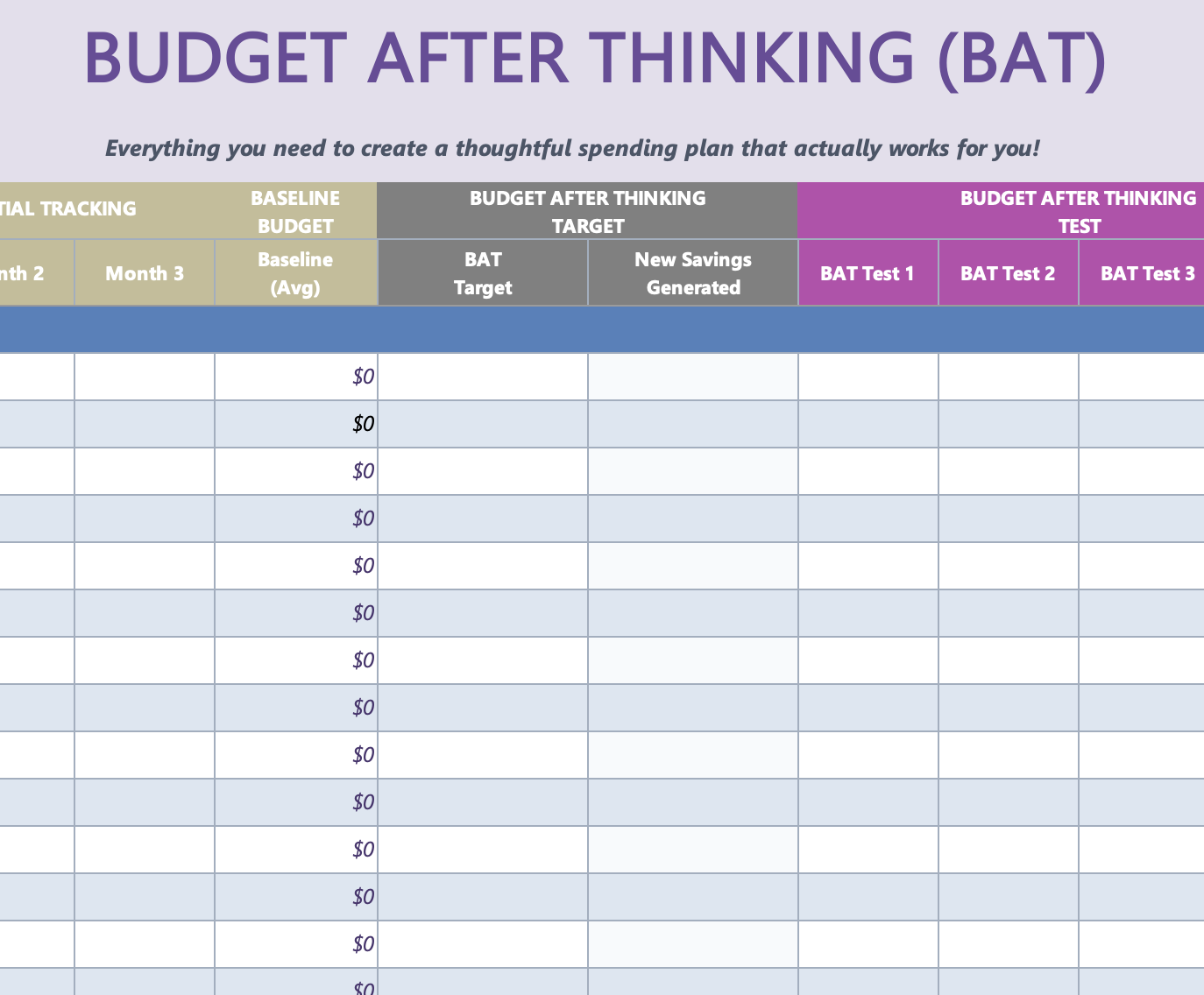
Once you have a better idea why you spend on certain things, you’re ready to start the process of budgeting.
“Budgeting” is kind of a nasty word. Nobody likes to say it out loud, let alone aggressively do it each month. This is why we spend so much time in the beginning talking about our money mindset.
A budget is worthless if you are not motivated to stick to it. Sure, you may stick to your budget plan for a month or two, but you’ll fall back into old habits if you haven’t prioritized what matters most to you.
Like it or not, everyone needs a budget… for a little while. Once we’ve identified what we spend money on and made some thoughtful choices, most of us don’t need a rigid budget.
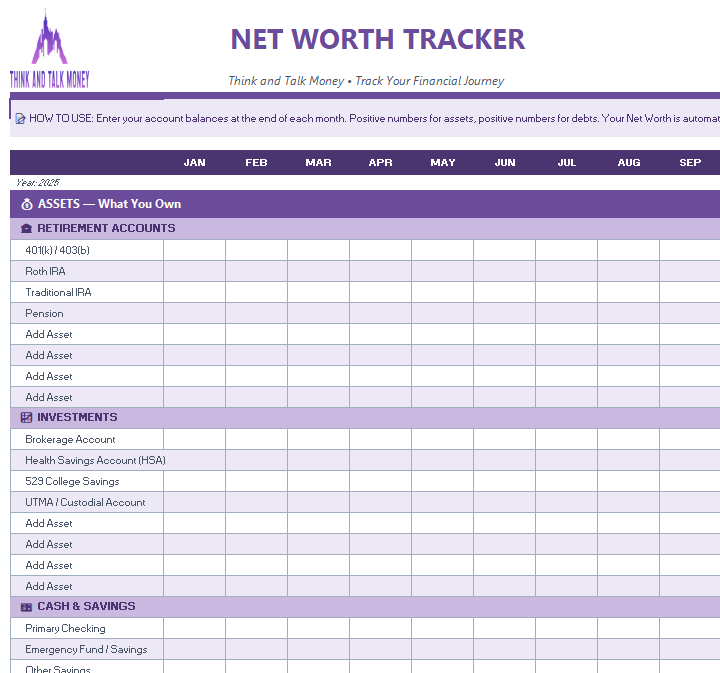
To bring it full circle, if you’ve thought and talked enough about your true motivations, you won’t need a budget either. Each month, you will take care of your obligations, grow your net worth, and use the rest of your money to buy things you love and to create experiences.
When that happens, you’ll stop being financially stressed and start feeling financially fulfilled.
How does that sound to you?
Leave a Reply