

Do you want to be good with money?
It’s not a trick question.
I absolutely want to be good with money.
Money is the tool that will allow me to spend more time with my family.
It will allow me to spend more time pursuing meaningful work.
When I’m not exerting mental energy stressing about money, I can exert that mental energy on my relationships and passions.
So, do I want to be good with money?
Absolutely, I do!
People who want to be good with money sometimes get a bad rap.
Unfortunately, there’s a common misconception that people who care about money are bad people. Or, it makes you greedy.
In fact, I was called a “Greedy Dragon” earlier this year by an online troll because I own rental properties. I actually took that one as a compliment because I love dragons.
To that point, have you ever noticed how clichés about money often feature a cocky guy driving a sports car and wearing a fancy suit?
That kind of depiction is so wrong it makes me huff. Like, out loud, huff.
The reality is that guy doesn’t want to be good with money at all. As soon as he earns money, he spends it on liabilities like clothes and cars. His main focus is on what people think of him, not his financial security.
Of course, that’s not what being good with money is about. Not even close.
You probably know people who think about money like this. These same people think that money is evil and so is anyone who has it.
People who think that money is somehow evil don’t understand what money is.
They make excuses for why they don’t invest in their own financial wellness. They convince themselves that there are more important things to think about than money.
The flawed logic goes something like: “That guy only thinks about money. I have better things to worry about. Besides, I don’t need money to be happy. I don’t even like material things.”
Since you’re reading a personal finance blog, I’m guessing that you don’t share that attitude. You’ve most likely come to recognize that being good with money is an essential life skill.
You also recognize that being “good with money” is not the same thing as “making a lot of money.”
A lot of lawyers make good money but aren’t good with money.
I know plenty of lawyers who make a lot of money. That doesn’t mean they’re good with money. Far from it.
This is a problem because our profession can be very taxing. We tend to work long hours under stressful conditions.
This means time away from our families. It means less time available to exercise, cook healthy meals, and sleep. You already know how important these things are to a healthy life.
Sadly, the nature of our profession means that lawyers have high rates of alcohol abuse and depression.
In a prominent study, the American Bar Association and the Hazelden Betty Ford Foundation found rates of alcohol abuse and depression among lawyers are among the highest of any career field in the U.S.
Studying nearly 13,000 attorneys, the authors concluded:
Substantial rates of behavioral health problems were found, with 20.6% screening positive for hazardous, harmful, and potentially alcohol-dependent drinking. Men had a higher proportion of positive screens, and also younger participants and those working in the field for a shorter duration…
Levels of depression, anxiety, and stress among attorneys were significant, with 28%, 19%, and 23% experiencing symptoms of depression, anxiety, and stress, respectively.
The authors further concluded:
Attorneys experience problematic drinking that is hazardous, harmful, or otherwise consistent with alcohol use disorders at a higher rate than other professional populations. Mental health distress is also significant.
As a lawyer, and someone who comes from a big family of lawyers, these conclusions terrify me.

Personal financial stress on top of professional stress is a recipe for disaster.
Now, I don’t know how to address all of the reasons why lawyers are struggling. I don’t think any one person has the answers.
But, I want to do my part.
What I do know is that layering our personal finance stress on top of our professional stress is a recipe for disaster.
That’s why I’m so passionate about teaching financial wellness to law students and lawyers.
Here’s the way I see it: if I can help alleviate your money stress at home, you won’t be distracted by that money stress when you’re at work.
That means you can more efficiently and productively serve your clients.
Not only does that benefit your clients and your firm, it benefits you.
How?
When you can work free of personal distractions, you can work more efficiently and productively. The end game is that you have more energy and time for your relationships and passions outside of work.
And, that’s what being good with money is all about.
Does any of that sound evil to you?
So, what can you do if you want to work your financial wellness?
You’re in the right place.
I have a three-step plan to get you on your way.
Step 1: Foster a positive money mindset.
The first step is to foster a positive money mindset. Without establishing why you want to be good with money, none of the specific skills and recommendations will matter.
Too many people want to jump right to investing and buying rental properties. Financial wellness doesn’t work like that.
You need to start at the beginning. That means money mindset.
In my blog, I write regularly about money mindset. You can learn all about developing a strong money mindset by reading my posts here.
Additionally, if you are interested in checking out one of my favorite money mindset books, you can find my top recommendations here.
Step 2: Find out where all your money is going.
The next step is to evaluate where your money is actually going each month. Once you know where your money is going, you can come up with a realistic plan that moves you closer to reaching your financial goals.
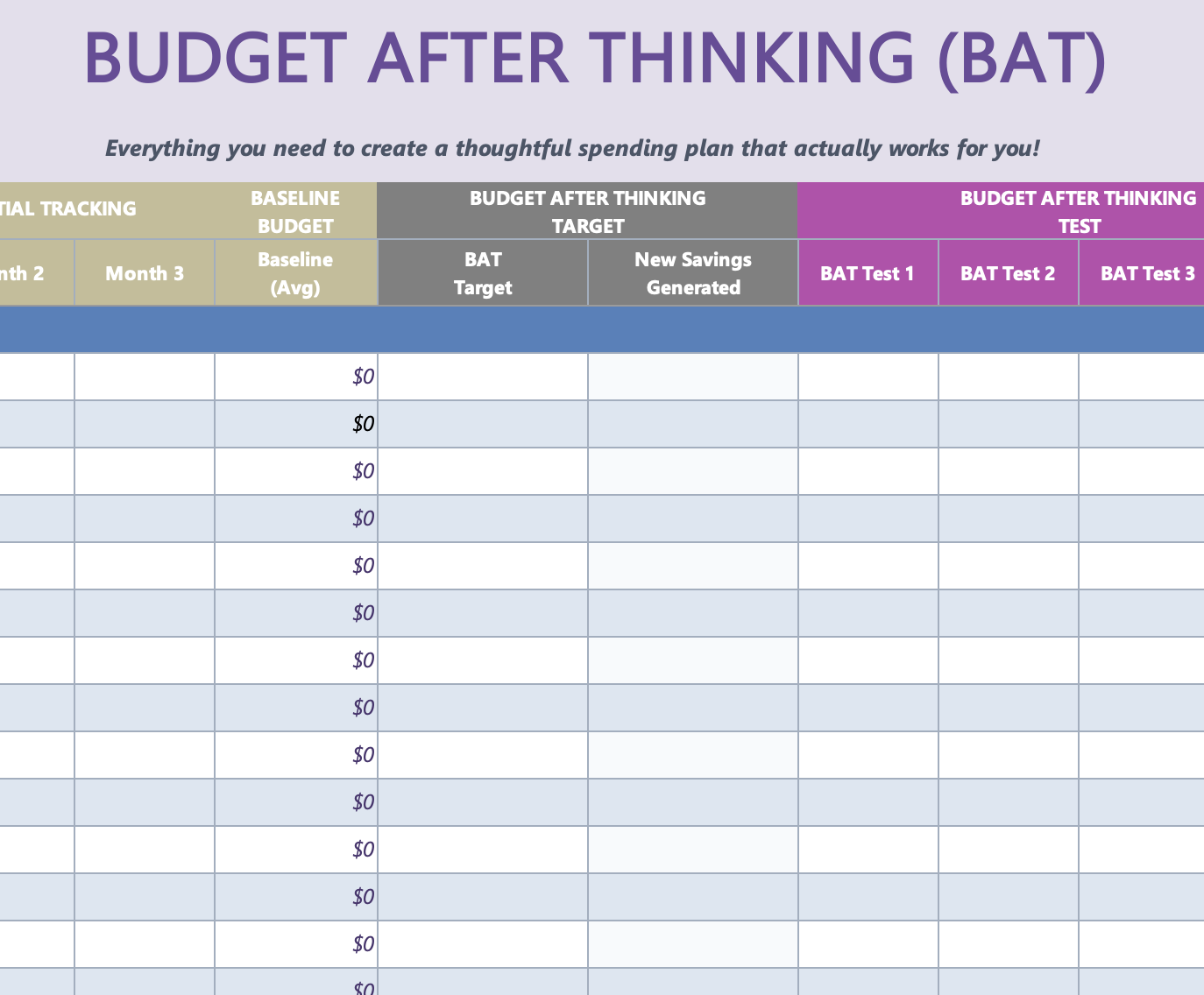
I call this process your Budget After Thinking.
For a step-by-step guide on how to create a Budget After Thinking, read my post here and follow-up posts here and here.
You might be wondering what makes my budget process different from any other budget.
My budgeting philosophy is premised upon your actual spending habits and realistic adjustments.
In other words, forget about aiming for predetermined, generic goals like saving 20% of your income.
I’ve taught enough law students and lawyers to know that these rigid, predetermined targets don’t work.
With massive student loan debt and soaring costs of living, generic savings targets just don’t work.
If you aim for some predetermined amount, you’ll end up cutting out everything you like spending money on to the point where you will resent your budget. Then, you’ll give up on your budget and fall back to your old habits.
The beauty of creating a Budget After Thinking is that it is based upon a baseline budget of your actual, current spending habits.
In evaluating your current habits, you can then make thoughtful and realistic adjustments to that budget that will actually last. Through this process, you can accomplish the main goal of generating more fuel for your ultimate financial goals.
And that leads us to the third and final step to begin establishing strong personal finance skills.
Step 3: Use financial calculators for concrete motivation.
Online Calculators are some of the most powerful motivational tools for developing financial wellness.
Check out our Think and Talk Money calculators for concrete motivation to allocate more of your monthly income to your financial goals.
When you play around with these calculators, you will quickly see how even seemingly small adjustments to your Budget After Thinking will pay massive dividends in the long run.
Remember, the goal of your Budget After Thinking is to generate more fuel for your future goals. What exactly does that mean?
This is where using a good financial calculator pays off.
For example, let’s say you cut $200 of spending per month and invested that money in an S&P 500 index fund with average historical returns of 10%.
Look at the results using the Think and Talk Money Compound Interest Calculator:
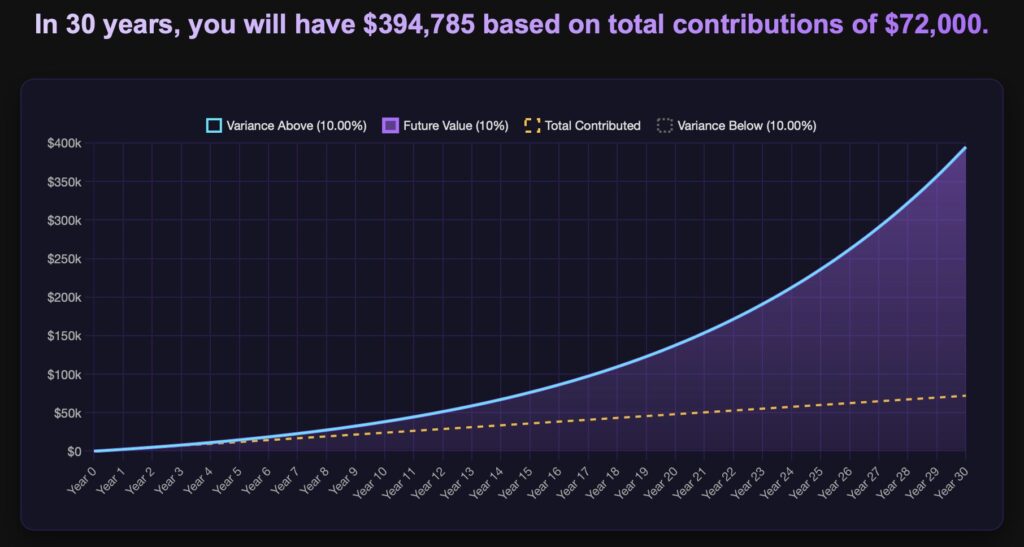
If you invested just that $200 each month for the next 30 years, you would have $394,785!
And, that’s based on contributing only $72,000 of your own money. The rest is interest you earned for doing nothing.
Take a second to let that sink in: You’d have nearly $400,000 in your investment account all because you created a Budget After Thinking.
If that doesn’t motivate you to make some thoughtful adjustments to your spending, I don’t know what will.
Now is the perfect time to invest in your financial wellness.
Now is the time to think back on the past year and remember all your wins. But, don’t forget about your mistakes. Those mistakes are how we learn.
If you’re not confident with your personal finances, there’s no better time than now to start developing your skills.
Whether we like it or not, money touches every facet of our lives.
When you take control of your money, you’ll see that your productivity at work improves.
Your relationships outside of work will improve.
I’d even go so far as to say that you’ll start to believe in yourself more. You may even find the courage to follow a different path in life you hadn’t previously explored.
It all starts with wanting to be good with money.
Are you ready?
Leave a Reply