
Tag: budget after thinking

  • My Advice: Sometimes You Gotta Spend the Money

    My Advice: Sometimes You Gotta Spend the Money

    The financial independence community sometimes gets a bad rap for encouraging excessive saving at the expense of present day spending.

    The reputation is not entirely undeserved.

    I listened to a podcast once where the guest admitted to the folly of trying to replicate Trader Joe’s trail mix by buying each of the ingredients individually and mixing them himself.

    I thought to myself, “This is what financial independence is about?”

    That never sat right with me.

    The podcast guest was happy enough to admit that the meager savings from making his own trail mix was not worth his time or energy. Still, if there was ever one aspect of the financial independence community that turned me off, it was advice like “make your own trail mix.”

    He was not alone in promoting what I considered excessive frugality. The word “miser,” referring to someone extremely stingy with money, comes up regularly in criticisms of people pursuing financial independence at all costs.

    To this day, I’ve never connected with the voices that promote extreme saving at the expense of present day convenience and fulfillment.

    I’ve also come to learn that this type of personal finance advice doesn’t work for lawyers.

    Advice like “make your own trail mix” doesn’t work for lawyers.

    As lawyers, we invest a lot of time (and money) into our education and careers. It’s no secret that we work long, stressful hours. One of the tradeoffs for all the hours we put in is that we have the opportunity to earn high incomes.

    Considering we work long hours and earn good money, advice like “make your own trail mix” isn’t very helpful. It’s not worth saving a few pennies in exchange for our limited free time when we could be doing the things that make us happy. When we’re not working, our time and energy should be better spent elsewhere, like being with our family, socializing with friends, or relaxing.

    What I’ve learned teaching personal finance to lawyers is that we are generally not interested in saving every penny possible until we can quit our jobs. This makes sense to me. Putting that much constraint and pressure on ourselves does not sound like a fulfilling existence.

    The lawyers that I work with know they need to save for retirement. At the same time, they want to use some of their hard-earned money for a better existence today.

    That’s why I recommend that lawyers spend money in ways that increase happiness, convenience and time. One of the best ways to practice this type of intentional spending is to create a Budget After Thinking.

    When you follow a Budget After Thinking, you give yourself permission to spend on things that make you happy today, while still achieving your long-term goals.

    Personally, shopping at Costco is an example of spending money today that brings me happiness, convenience, and time.

    A detailed close-up view of a mixed nuts and dried fruits snack, showing natural textures and colors. Ideal for healthy eating, nutrition, and food background concepts and illustrating why sometimes you gotta spend the money.
    Photo by Monaz Nazary on Unsplash

    What I learned about spending money by shopping at Costco.

    This past Sunday afternoon, my wife and I took the kids to Costco. I was thinking about all this while we walked through the store loading up our two carts.

    It was a nice family outing. We killed a couple of hours, the kids had fun, and we have food and supplies to last us for a month.

    On average, we shop at Costco once per month. We get our staple items (toilet paper, ground beef, coffee, etc.) and always end up with a few things not on our shopping list. On this weekend’s trip, the kids talked their way into Kit Kat chocolate bunnies (didn’t even know they made those) and enough AA and AAA batteries to power an airplane.

    The thing about shopping at Costco: no matter your best intentions walking into the store, the final bill is always big. Somehow, the cart always fills up. What a business!

    Anyone who shops at Costco will instantly know what I’m talking about.

    I’m no longer shocked or disappointed with the final bill. When my wife jokingly asks what the total is, my answer is always the same, “A lot.”

    What I’ve learned is that despite spending a lot of money at Costco, I view this as money well spent. We usually pick up some fun items that are relatively inexpensive and make us and the kids happy. Plus, because we load up on essential items to get us through the month, we don’t spend much time or money each week at the grocery store.

    Even though the final bill is always big, I view shopping at Costco as an example of intentionally spending money in a way that increases happiness, convenience, and time.

    Which leads me to one of the most important money lessons I’ve ever learned:

    Sometimes, you gotta spend the money.

    Sometimes, you gotta spend the money.

    Personal finance is not only about saving. Yes, saving is crucial to achieving our long-term goals. But, I don’t recommend that we save so dogmatically that we make ourselves miserable along the way.

    As lawyers, we work hard and we work a lot. If all we did was save every penny we earned in hopes of quitting our jobs one day, we would quickly burnout.

    Instead of making your own trail mix, remember this piece of advice:

    Sometimes, you gotta spend the money.

    Buy the direct flights.

    Costco is only one such example of when it makes sense to spend the money. I spend a lot of money at Costco each visit. But, we enjoy our family outings and get most of the essential items we need for the month in one trip. That’s money well-spent on happiness, convenience and time.

    If my goal was to save every penny possible, I wouldn’t feel the same way about Costco.

    Not a Costco shopper? Here’s another recent example when I decided to just spend the money.

    My brother-in-law’s wedding is in Scottsdale this fall. When I booked our flights, I could have saved real money by connecting in Denver or Los Angeles instead of flying direct to Phoenix. But, at what other cost?

    Anyone ever flown across the country with young kids?

    A four-hour flight with three young kids is hard enough. My wife has it especially tough with the baby on her lap the entire flight. By the time we land, it feels like we just worked out for 4 hours.

    The last thing in the world that we need is to extend the adventure with a connecting flight, even if it saves real money. My priority is to arrive in Arizona feeling energized and excited to celebrate this once-in-a-lifetime event with my family.

    Sometimes, you gotta spend the money.

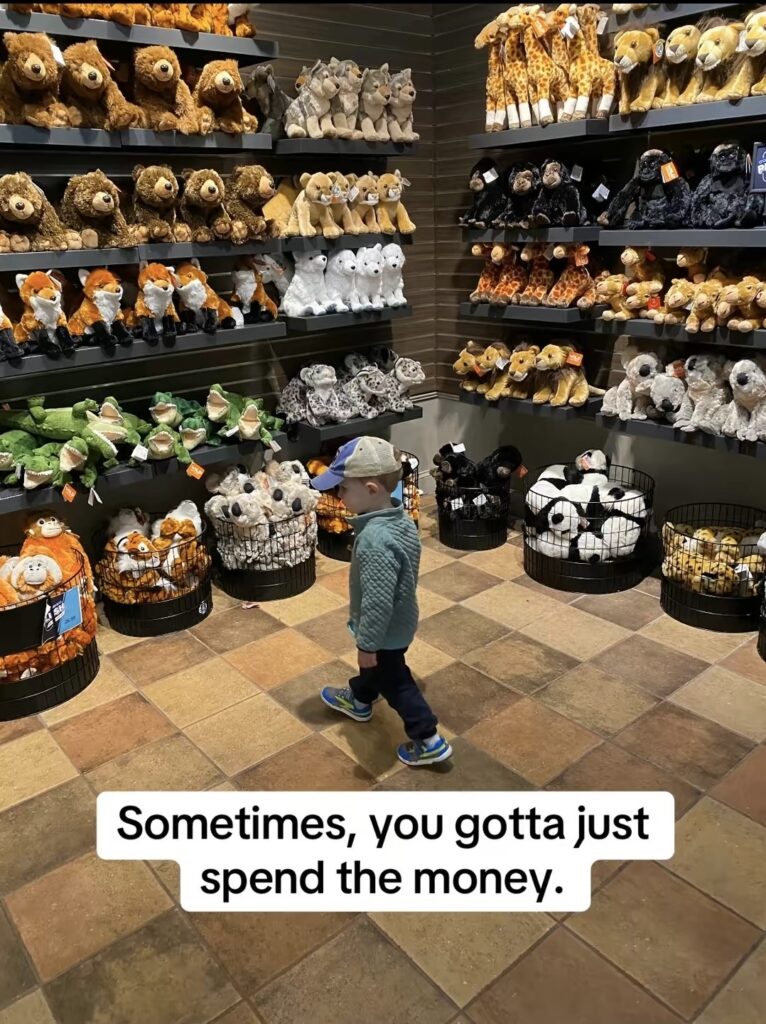
    boy shopping for stuffies indicating sometimes you gotta spend the money.

    Personal finance is tied to our emotions.

    Humans are emotional creatures. Of course, we can rationally look at examples and charts and won’t dispute the long term magic of compound interest. At the same time, we have emotions and feelings that need to be tended to now.

    At Think and Talk Money, we regularly explore how personal finance is tied to our emotions. There’s nothing wrong with admitting that in certain situations, the right choice is to spend the money.

    Traveling is a good example of spending money to increase happiness. In fact, the happiness effect has been well-documented when it comes to traveling. People get a happiness boost in planning the trip, then taking the trip, and finally remembering all the fun things they did on the trip.

    That’s why so many people “love to travel.” It brings them happiness before, during, and after the trip.

    Personal finance is about how we spend money today, not just in the future.

    Personal finance is not just about long term goals, like saving for retirement. Just as important, personal finance is about how we spend our money in the present.

    It’s not realistic to expect people to put off all happiness until some unknown time in the future. It is realistic to make reasonable choices now to ensure a better future.

    What might be a reasonable spending choice for one person may be totally unreasonable for someone else. That’s perfectly fine. Still, we all need to make those choices for ourselves.

    What I’m suggesting is that if you’re spending most of your time each week at your job, like most of us lawyers do, shouldn’t we think about using some of the money we earn so we can elevate our present day lives? 

    The key is understanding what those things are, so we actually spend our money in pursuit of those things.

    That’s the essence of what it means when I say, “s , you gotta spend the money.”

    So, what’s a recent example of where you decided to spend the money?

    Let us know in the comments below.

  • Young Lawyers: Don’t Give Up on Your Financial Future

    Young Lawyers: Don’t Give Up on Your Financial Future

    In a recent paper called “Giving Up”, authors Seung Hyeong Lee and Younggeun Yoom examined a troubling trend in younger generations.

    The authors found that because home ownership has become so expensive, many younger generations have given up on the idea altogether.

    Whether you want to own a home is not the main takeaway. We can debate the merits of home ownership all day long.

    The main takeaway of the article is something far worse than that.

    The authors hypothesize that the high cost of home ownership has impacted young people’s overall outlook on work, spending and life.

    Because people don’t think they can afford to own a home, they shift their entire behavior when it comes to money. The authors project that:

    [Those] born in the 1990s will reach retirement with a homeownership rate roughly 9.6 percentage points lower than that of their parents’ generation. The model also shows that as households’ perceived probability of attaining homeownership falls, they systematically shift their behavior: they consume more relative to their wealth, reduce work effort, and take on riskier investments.”

    More consumption?

    Less work effort?

    Riskier investments?

    Do these projections raise any red flags for anyone else?

    The authors go on to explain their thesis. Goals like purchasing a home, paying for college, or saving for retirement require sustained effort over the long-term. However, these goals are getting harder to attain due to rising costs for homes and childcare, not to mention inflation.

    The problem with these goals being so hard to reach?

    As the authors explain:

    [W]hen such goals become exceedingly difficult and are perceived as beyond realistic reach, households may cross a threshold at which they begin to give up on them entirely. Unfortunately, this abandonment of major life goals is becoming increasingly common world-wide, particularly among younger generations. 

    According to the Harris Poll’s 2024 State of Real Estate Survey,1 42% of Americans and 46% of Gen Z respondents agreed with the statement, “No matter how hard I work, I will never be able to afford a home I really love.

    No matter how hard I work, I will never be able to afford a home I really love.

    If the authors are correct in their theory, this is a troubling article.

    Should we give up on personal finance education?

    When I first read this article, I immediately thought about a law student in my personal finance class a few years ago.

    After the course, she wrote to me that the material we covered will never apply to her. She explained that she already had too much debt and will never earn enough to think about saving and investing.

    She had already resigned herself to living paycheck to paycheck in a perpetual struggle to get by. In the end, she wrote, personal finance education would never matter for her.

    At first, I was shocked by her perspective. She was about to graduate law school and had endless potential in front of her. Why was she so pessimistic about the future? Sure, it would take some time and effort to pay off her loans, but there was a path forward.

    After a few more years of teaching, I realized that she was not alone in her concerns. The only thing different about her was that she was vocal and honest about her money fears. I’ve come to learn that a number of my students have the same worries:

    High education debt.

    Rising costs of housing and other consumer goods.

    Incomes that have not kept up.

    I can understand why some people give up when the odds seem so stacked against them.

    Of course, I know that some people are beyond convincing that personal finance education is crucial to their overall well-being. I get trolled on socials all the time by people with this type of mentality.

    So, while I understand the anxious money mindset, I’m not even close to giving up on young people having a solid financial future. This is especially true when it comes to young lawyers.

    Now, when I read articles like this, I am more motivated than ever to teach personal finance to lawyers.

    Being a lawyer is a hard job.

    It’s no secret that our profession is a challenging one.

    I know plenty of lawyers who make a lot of money. That doesn’t mean they’re good with money. Far from it. 

    This is a problem because our profession can be very taxing. We tend to work long hours under stressful conditions. 

    This means time away from our families. It means less time available to exercise, cook healthy meals, and sleep. You already know how important these things are to a healthy life.  

    Sadly, the nature of our profession means that lawyers have high rates of alcohol abuse and depression

    In a prominent study, the American Bar Association and the Hazelden Betty Ford Foundation found rates of alcohol abuse and depression among lawyers are among the highest of any career field in the U.S.

    Studying nearly 13,000 attorneys, the authors concluded:

    Substantial rates of behavioral health problems were found, with 20.6% screening positive for hazardous, harmful, and potentially alcohol-dependent drinking. Men had a higher proportion of positive screens, and also younger participants and those working in the field for a shorter duration… 

    Levels of depression, anxiety, and stress among attorneys were significant, with 28%, 19%, and 23% experiencing symptoms of depression, anxiety, and stress, respectively.

    The authors further concluded:

    Attorneys experience problematic drinking that is hazardous, harmful, or otherwise consistent with alcohol use disorders at a higher rate than other professional populations. Mental health distress is also significant.

    As a lawyer, and someone who comes from a big family of lawyers, these conclusions terrify me.

    Which is a major reason why personal finance education is so important for lawyers.

    Walk your path including not giving up on your financial journey as a young lawyer just as you're getting started..
    Photo by Ioana Trandafir on Unsplash

    Some of the personal finance challenges have changed, but the fundamentals remain the same.

    For lawyers, high student debt loads and other financial pressures are certainly among the reasons for our personal challenges.

    The thing that gets me the most is when people give up at the very beginning of the journey, sometimes before the journey has even started. 

    Whether we like it or not, money touches all aspects of our lives. Why give up on learning about money instead of learning how to use it for the tool that it is?

    If learning personal finance sounds appealing to you in light of the challenges we face, here are three steps to help you get started.

    Step 1: Foster a positive money mindset.

    The first step is to foster a positive money mindset. Without establishing why you want to be good with money, none of the specific skills and recommendations will matter.

    This first step is essential and will help any young lawyer who is thinking about giving up on the future.

    In my blog, I write regularly about money mindset. You can learn all about developing a strong money mindset by reading my posts here

    Additionally, if you are interested in checking out one of my favorite money mindset books, you can find my top recommendations here.

    Step 2: Find out where all your money is going.

    The next step is to evaluate where your money is actually going each month. Once you know where your money is going, you can come up with a realistic plan that moves you closer to reaching your financial goals. 

    I call this process a Budget After Thinking.
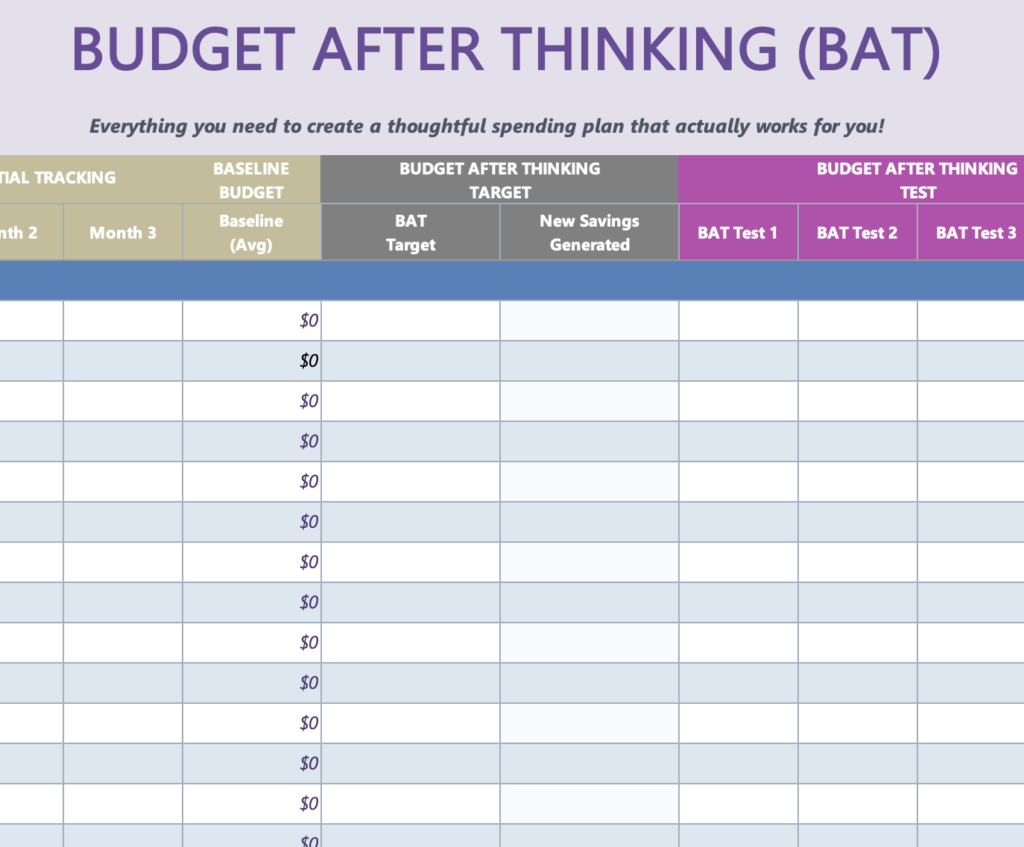
    Having a Budget After Thinking is crucial for not giving up on your future financial goals. You would be amazed at the confidence you can build if you can stick to a simple plan for your money.

    For a step-by-step guide on how to create a Budget After Thinking, read my post here and follow-up posts here and here.

    You might be wondering what makes my budget process different from any other budget.

    My budgeting philosophy is premised upon your actual spending habits and realistic adjustments. 

    In other words, forget about aiming for predetermined, generic goals like saving 20% of your income. 

    I’ve taught enough law students and lawyers to know that these rigid, predetermined targets don’t work. 

    With massive student loan debt and soaring costs of living, generic savings targets just don’t work. 

    If you aim for some predetermined amount, you’ll end up cutting out everything you like spending money on to the point where you will resent your budget. Then, you’ll give up on your budget and fall back to your old habits.

    The beauty of creating a Budget After Thinking is that it is based upon a baseline budget of your actual, current spending habits. 

    In evaluating your current habits, you can then make thoughtful and realistic adjustments to that budget that will actually last. Through this process, you can accomplish the main goal of generating more fuel for your ultimate financial goals.

    And that leads us to the third and final step to begin establishing strong personal finance skills to prevent you from giving up before you get started.

    Step 3: Use financial calculators for concrete motivation.

    Online Calculators are some of the most powerful motivational tools for developing financial wellness.

    Check out our Think and Talk Money calculators for concrete motivation to allocate more of your monthly income to your financial goals.

    When you play around with these calculators, you will quickly see how even seemingly small adjustments to your Budget After Thinking will pay massive dividends in the long run. 

    Remember, the goal of your Budget After Thinking is to generate more fuel for your future goals. What exactly does that mean?

    This is where using a good financial calculator pays off. 

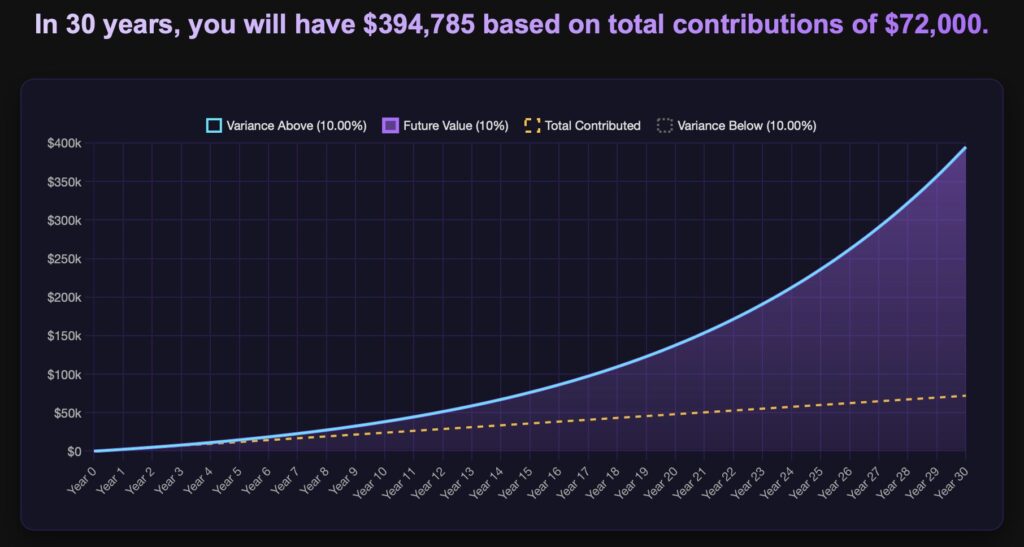
    For example, let’s say you cut $200 of spending per month and invested that money in an S&P 500 index fund with average historical returns of 10%. 

    Look at the results using the Think and Talk Money Compound Interest Calculator:

    If you invested just that $200 each month for the next 30 years, you would have $394,785! 

    And, that’s based on contributing only $72,000 of your own money. The rest is interest you earned for doing nothing.

    Take a second to let that sink in: You’d have nearly $400,000 in your investment account all because you created a Budget After Thinking

    If that doesn’t motivate you to make some thoughtful adjustments to your spending, I don’t know what will.

    Now is the perfect time to invest in your financial education.

    If you’re thinking about giving up on your future goals, there’s no better time than now to invest in your financial education.

    Whether we like it or not, money touches every facet of our lives. 

    When you take control of your money, you’ll see that your productivity at work improves. 

    Your relationships outside of work will improve. 

    I’d even go so far as to say that you’ll start to believe in yourself more. You may even find the courage to follow a different path in life you hadn’t previously explored.

    By the way, if most of your peers are giving up, think of the opportunities out there for anyone willing to learn personal finance.

    If less people are motivated to work hard, imagine what a strong work ethic can do for you.

    If less people are looking to buy a home, think about the homes that might be available if you make it a goal to buy one.

    When other people spend and spend in the present day, think of the foundation you can build by investing in the future.

    Yes, there are some of us who will give up and never try to build for the future because of these present day challenges.

    You could be one of those people.

    Or, you can make it more of a priority to build your financial foundation.

    After all the years you’ve spent in school to earn the right to practice law, my gut tells me you’re the type of person willing to put in the work.

    Don’t give up on your financial future.

    Invest in your personal finance education and thrive when others quit.

  • The FI Police Won’t Like How Much I Spend on Housing

    The FI Police Won’t Like How Much I Spend on Housing

    If I have one critique about the financial independence community, it’s that certain segments can be awfully judgy.

    This is especially true when it comes to how people choose to spend their money.

    If you choose to spend money on a big house, a fast car, or heaven forbid… a latte… watch out for the Financial Independence Police.

    They will tell you you’re doing it all wrong, and you’ll never reach financial freedom spending like that.

    I disagree.

    More to the point, I don’t find judgments like that productive, especially when I teach personal finance to lawyers.

    Instead, I do my best to encourage my students to spend their money based on their own values, not anyone else’s. Yes, there always tradeoffs. But, those tradeoffs are yours alone to make.

    In today’s post, I wanted to explore this concept as it relates to my own spending decisions.

    Spoiler alert! The FI Police won’t like how much I spend on housing.

    Let’s dive in, starting with how the average American spends his money.

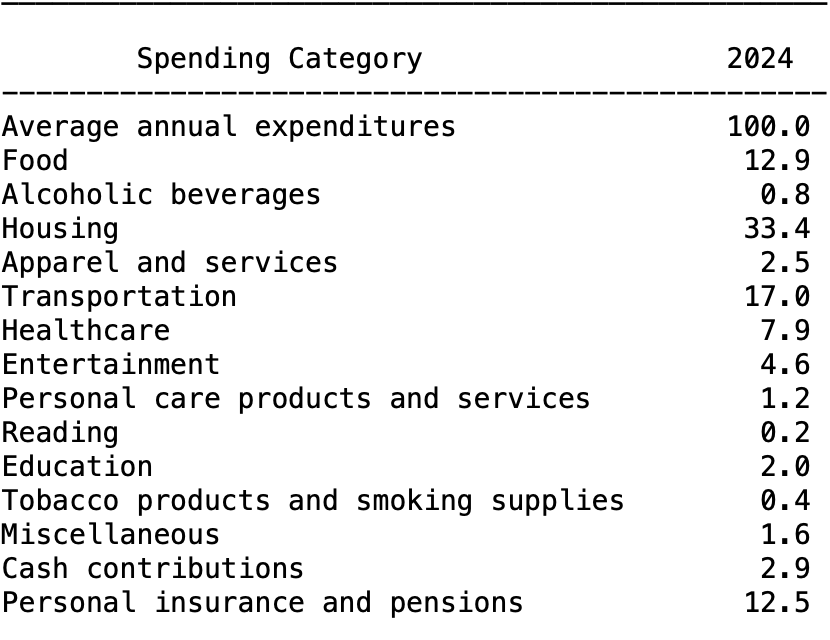
    The average American spends the most in three categories: housing, transportation and food.

    According to the U.S. Bureau of Labor Statistics, Americans tend to spend the most money each month on housing (33.4%), transportation (17%), and food (12.9%).

    Those three categories equate to nearly 63% of the typical American’s budget. This is not to say that you should base your spending on these averages. Everyone is different.

    But, conventional wisdom goes that by focusing on just those three categories, most people can make major strides towards financial independence.

    Scott Trench from BiggerPockets Money has been championing this idea for years. Check out his book Set for Life to read more about the impact you can make on your finances by targeting just these three areas.

    Personally, I spend way more on housing than the typical American.

    Look out! Here comes the FI Police!

    Before they lock me up and throw away the key, hear me out. There are some intentional reasons why my wife and I spend more on our house, some financial and some emotional.

    And, I’ve never been closer to financial independence.

    More on that below.

    First, let’s remind ourselves about that intersection between money and emotions and why it’s so important to make individual decisions when it comes to our money.

    There are no hard and fast rules on how you should spend your money.

    In The Art of Spending Money, bestselling author Morgan Housel explores the relationship between spending money and happiness.

    Housel’s primary thesis is that there are no hard and fast rules on how you should spend your money. What you may value is different from what I may value. 

    For that reason, we should all make individual spending choices based on what matters the most to us. To go along with that, we should not spend money to impress other people. When we do that, we will never find happiness.

    In Housel’s estimation, seeking external validation based on material possessions is a one-way ticket to a miserable life.

    It’s hard to disagree with that.

    Here’s a passage about spending habits that resonated with me:

    The people I know who’ve used money best have inconsistent spending habits. They spend a lot of money on this, and very little on that. They value this, and couldn’t care less about that. They’re independent thinkers, forcing their money to work for them, not the other way around.

    This was such a brilliant observation that it inspired me to write about how I spend my money. That’s the focus of today’s post.

    What you can learn from other people’s spending habits.

    As you read about my spending habits, remember Housel’s advice:

    We all value different things and experiences. That means we naturally should be spending money on different things and experiences.

    Of course, you may appreciate some of my spending decisions. On the flip side, you may think other spending decisions are foolish.

    That’s OK. No FI Police to worry about here.

    The point is not for me to tell you, “Spend money like me if you want to be wealthy.”

    The idea is that by hearing my perspective, you might be inspired to evaluate your own spending habits and think about whether you want to make any adjustments.

    And, that right there is the whole key to budgeting.

    Why a Budget After Thinking works for young lawyers when other budgeting systems fail.

    It’s not for me or anyone else to tell you what to do with your money. Housel knows a thing or two about money and just wrote an entire book premised upon that message.

    That’s why I don’t tell you to save 20% of your income or only spend 50% on fixed expenses.

    In my experience teaching personal finance, that advice just doesn’t work for young lawyers with entry-level salaries and massive student loan debt.

    The truth is fixed spending rules sound good until you actually try to implement them.

    In reality, when you base your entire budgeting strategy on arbitrary rules like “save 20%,” you’re likely to realize that target is out of reach.

    You would have to cut so much from other areas that your budget would be oppressively restrictive. The result is you’ll get frustrated and quit your budget.

    I have a different approach. One that actually works for young lawyers.

    With a Budget After Thinking, the central purpose is to evaluate your current spending habits, no matter your starting point. Once you understand where your money is going, you can implement thoughtful adjustments that match your lifestyle and financial goals.

    No hard and fast rules.

    Just individual thought and discretion.

    And, that leads us to my self-evaluation on how I spend money.

    Note: for budgeting purposes, I do not include bonuses in my income. Any bonus money I earn goes straight to investments. Call it the “Jay Leno Rule.” More on that in a future post.

    Housing takes up about 40% of my budget.

    Similar to most Americans, housing is my biggest monthly expense.

    Where I’m different is that I spend more of my monthly budget on housing than most.

    The funny thing is my answer would have been the exact opposite if I wrote this post in 2024.

    From 2018-2024, I had zero housing costs. We lived in apartments within buildings that we owned. The rent we collected covered all of our housing expenses. That allowed us to save a lot of money, most of which we invested in more rental properties.

    In 2024, we moved into our “forever home” just outside Chicago. For the first time in our married life, we had housing expenses to pay on our own.

    Housing now takes up about 40% of my monthly budget.

    Here are some reasons why we choose to spend more on housing.

    My wife and I are comfortable spending a decent amount on housing at this stage of our lives. We made that decision intentionally and haven’t regretted it for a second.

    Here are some of the financial reasons why we choose to spend more on housing:

    • We lived in small apartments for free until I was almost 40-years-old. If you average out our housing costs including that time period, we’re well below the American average.
    • We have already reached Coast FIRE. That means we’ve already saved enough for a comfortable retirement, opening up more money to spend today. To see if you’re in the same boat, you can use the TATM Coast FIRE calculator.
    • Additionally, we have enough saved to cover college for 2 of our 3 kids. Again, more money to spend elsewhere. You can see if you’re on track with the TATM 529 College Savings Calculator.
    • Finally, refer back to the Jay Leno Rule mentioned above. We don’t spend our bonuses, just our regular paycheck. If we included bonuses, that 40% figure would drop significantly.

    In terms of emotional reasons, here’s why we choose to spend more on housing:

    • Our family is growing. We now have three young kids. The neighborhood is full of families, and the schools are great. This is the exact time in life to prioritize a home for my family.
    • We can walk to parks, shops, and restaurants. It’s also an easy commute downtown for me.
    • We simply like spending time at home. Call me a homebody. As a family of five, we spend a lot of time amusing ourselves at home.
    • On top of that, just about every weekend, we host friends or family at our house, something we prefer to going out.

    The point is: we spend more than average on our home, but it’s more than worth it to us.

    The tradeoff is that because housing eats up a big chunk of our budget, we intentionally don’t spend as much in other areas. That ensures we stay on track to financial independence.

    Let’s explore that further.

    Matthew Adair picking up a big box from warehouse reflecting what he spends money on and doesn't like it or not like it but has to do it.

    Transportation takes up only 3% of my monthly budget.

    Spending decisions always have ripple effects. In my case, that plays out when you look at my housing expenses in relation to other areas, like transportation expenses.

    Here’s what I mean:

    We spend a decent amount on our house, but because of the house we chose, we don’t spent a lot on transportation.

    I walk to the train station for my commute downtown. We walk our kids to school. For date night, my wife and I walk into town for dinner.

    Most of our weekly driving is to the grocery store (2 miles away) or to kids’ activities (all close by). On the weekends, we tend to visit grandparents (25 miles away or less), which also means free entertainment.

    In total, we just don’t drive very much. When we do drive, we don’t go very far.

    All told, we spend about 3% of our monthly budget on transportation.

    That includes car insurance, gas, maintenance, and train passes.

    We do not have a car payment. One of our cars is now 10-years-old and the other we bought two years ago. We don’t plan on replacing either vehicle anytime soon.

    Food eats up about 7% of my monthly budget.

    Do you see what I did there?

    As a family of five, our grocery bills keep getting bigger. Kids gotta eat, right?

    Most of our food budget is used at the grocery store. We shop at Costco, Mariano’s and Trader Joes.

    We eat most of our meals at home. I bring my lunch to work every day. Same for coffee.

    So, most of our food budget is for groceries rather than dining out.

    As for dining out, this just isn’t a big part of our lives or budget. I owe a lot of that to having young kids who sort of take all the fun out of restaurants, but also that we like eating at home (see above).

    When we do dine out, we tend to keep it casual. We do pizza night weekly at a neighborhood Italian restaurant. Maybe carryout a couple times per month.

    My wife and I are hoping to incorporate more date nights this year. Not always the easiest thing with three kids under six at home.

    If you add up date nights and socializing with friends, we dine out maybe 2-3 times per month.

    Add it all up and food eats up about 7% of our monthly budget.

    In total, 50% of my monthly budget goes to housing, transportation, and food.

    In total, we spend 50% of our budget on housing, transportation, and food. That’s less than the typical American (63%).

    However, compared to the typical American (33%), we spend more on housing (40%). We make up for it by spending less on transportation and food.

    What would the FI Police have to say about that?

    In my opinion, there’s no right way or wrong way to do it. We try to be intentional about each choice we make, understanding the ripple effects on the rest of our budget.

    The end result is that by keeping our spending in check in these three major categories, even with spending more on housing, we have more funds available for fun and for financial goals.

    What else do I spend money on?

    The remaining 50% of our budget goes mainly towards discretionary spending and financial goals.

    I’ve previously outlined my current financial goals. Click here to read more.

    Today, I’ll give an overview of how I spend the rest of my money.

    I am a “Buy Once, Cry Once” consumer.

    I am definitely a “Buy Once, Cry Once” person. That means I’m happy paying more upfront for a quality item that will last to avoid the repeated costs and frustration of replacing cheaper items.

    That applies to clothing, furniture, recreational items, gadgets, and everything else. For example, I’d rather spend more on a single nice sport coat that will last me decades instead of three cheaper ones that will need to be replaced.

    As another example, we’ve been in our house for less than two years and are taking our time getting furniture to fill it up. I’d rather buy one new dresser that will last until the kids are off to college instead of three new dressers that I’ll need to replace.

    The tradeoff is that certain rooms look emptier for longer. I laughed when we hosted a party and some guests made fun of the smallish TV we have in the family room.

    My wife and I are fine with that. We don’t like clutter. We don’t like shopping. This spending philosophy matches our personalities perfectly.

    We spend money on travel and the kids.

    As a family, we like to take trips to our two favorite places, Colorado and Florida. While traveling with a family of five can be expensive, we use points to keep our costs as low as possible.

    To that end, we primarily use the Chase Sapphire Reserve to earn points and pay for travel.

    Besides traveling, we spend a good amount on kids’ activities: ski lessons, piano lessons, swimming lessons, soccer, dance, Girl Scouts… and that’s just what comes to mind for my oldest daughter.

    Yikes.

    As a side note, if you ever needed a reason to learn strong personal finance fundamentals when you’re young, re-read that previous sentence. It’s important to take ownership of your money decisions right now. It only gets more complicated as you progress through life.

    I don’t mind spending on the kids so they can try new experiences. It’s fun to watch them have fun, socialize and learn new skills.

    Christmas tree and presents reflecting some self-evaluation followed by thoughtful adjustments, which is the backbone of his Budget After Thinking system.

    My love language is gift giving.

    Have you ever looked up your “love language?”

    I think mine is gift giving. I like buying gifts for my wife and kids, more than I like getting things for myself.

    That means plenty of opportunities to spend money with four birthdays and seemingly unlimited holidays throughout the year.

    I particularly enjoy when I think of a gift idea months ahead of time and visualize the moment when I give it to the person.

    These gifts don’t have to cost a lot of money, by the way. Ask my father-in-law about the garbage bags I gifted him. I planned that one for months. I think I enjoyed it more than he did…

    We spend intentionally on everything else without tracking every penny.

    Besides these expenses, we spend intentionally on things and experiences as they present themselves throughout the year.

    To stay on budget, we track just two simple numbers using the TATM Budget After Thinking Template™️.

    We’ve learned enough about our spending habits that we no longer need to track every penny. When we want to buy something, we buy it and focus on just those two simple numbers.

    For example, I got really into planting trees in the backyard last spring.

    Trees can be expensive, but I enjoyed putting them in the ground and watching them grow throughout the season. Plus, when I would buy a couple trees, I’d make sure to hold off on other big purchases that month.

    As another example, the kids are really into Halloween and Christmas decorations for the house. Each year, I tell my kids they can pick out one new decoration. This year, it was a giant skeleton. It brought them so much joy.

    Holiday decorations like that are another seasonal expenditure that we’re happy to take on with a little advanced planning.

    So, how do you spend your money?

    This was a fun and valuable post to write.

    It forced me to self-evaluate my spending decisions, and I’m generally happy with where I’m at.

    That hasn’t always been the case.

    When I started on my financial independence journey, my spending was a mess. It took some time and discipline to get on the right track.

    What I learned is that once you make those thoughtful adjustments, the results can be life changing.

    I encourage you to take a look at your owning spending habits.

    If you’ve never thought about budgeting before, you can learn all about my Budget After Thinking philosophy here. You’ll find a custom-built budgeting template and links to a number of posts to help you get started.

    When you evaluate your habits, you may be in a similar boat as me or a completely different boat.

    Either way, let me know in the comments below or reach out if you have any questions.

    That’s what makes thinking and talking money fun.

  • Budget Busters are the Most Expected Expense of All

    Budget Busters are the Most Expected Expense of All

    Are you the type that gets mad at traffic?

    What about the type that gets mad at airport security lines?

    I was in an airport security line recently where multiple lines were merging into one when I heard a guy say to another traveler who he thought cut in front of, “I’m in line, too!”

    Clearly, he’s the type who gets mad in airport security lines.

    This always puzzles me.

    You know there’s going to be traffic. There’s always traffic.

    You know airport security lines are chaotic.

    Why do we let these things bother us?

    My theory is that because we didn’t plan ahead. We didn’t check the directions before leaving the house to avoid traffic. Or, we didn’t get to the airport early enough to not stress about security lines.

    The point is that you can’t stop traffic from happening just like you can’t avoid security lines at the airport.

    But, with the right planning, these inconveniences don’t have to ruin your day.

    What does this have to do with personal finance?

    Well, traffic and security lines are unavoidable.

    That doesn’t mean you have to like them. You just have to accept that they are part of life and things you can handle.

    You know what else is unavoidable?

    Budget busters.

    What are budget busters?

    Budget busters are any inconsistent expenditures, good or bad, that can derail your finances if not properly planned for.

    Good budget busters might include trips, weddings, and holiday/birthday gift shopping.

    Bad budget busters include unexpected car repairs, home repairs, or medical expenses.

    The key with budget busters is that you need to plan ahead. That’s because even though we know budget busters will happen, we just don’t know when they will occur.

    When I teach personal finance to young lawyers, this is one of the major areas of concern when it comes to budgeting. It is not uncommon for people to worry about how they’re going to pay for inconsistent, big ticket items.

    Remember, budget busters don’t have to be for only “bad” things, like repairing a furnace. More on that below.

    Budget busters can also be for fun things, like being a bridesmaid in your best friend’s wedding, which can easily cost you thousands of dollars.

    With the proper planning, you can handle these inconsistent expenses, good or bad.

    If you don’t plan ahead, budget busters will make you mad in the same way people get mad at traffic and airport security lines.

    Budget busters are not unexpected expenses.

    You may sometimes see budget busters referred to as “unexpected expenses.”

    Nope, that’s wrong.

    Budget busters may be inconsistent, but they are not unexpected.

    It’s more accurate to say that budget busters are 100% expected expenses. We just don’t know exactly when they’re going to occur.

    Like with traffic and lines at the airport, budget busters are inevitable. It’s up to each of us to plan ahead to minimize the inconvenience and stay on track with our finances.

    I don’t make many guarantees around here. This is one I’m comfortable making:

    I guarantee that each of us will face potential budget busters throughout the year.

    In fact, I just experienced a potential budget buster on a cold November morning in Chicagoland.

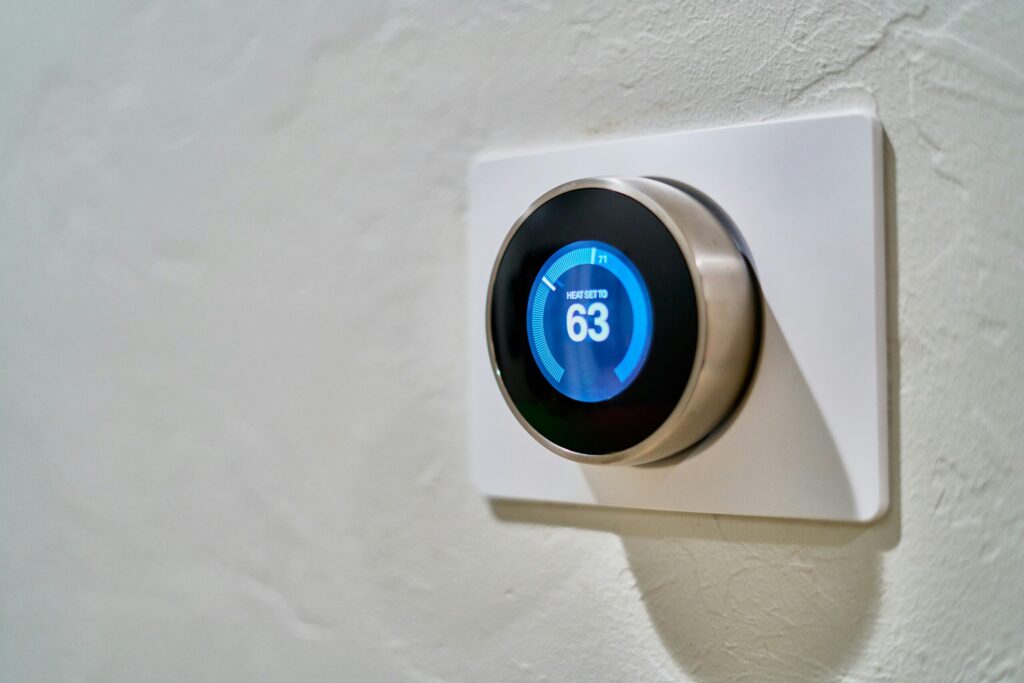
    gray nest thermostat displaying 63 indicating that budget busters are the most expected aspect of your budget
    Photo by Dan LeFebvre on Unsplash

    I had a potential budget buster recently when I replaced a furnace.

    A couple of weeks ago, on a cold November morning in Chicagoland, I woke up with a broken furnace.

    It was certainly inconvenient and potentially a huge drag on my finances. The final cost to replace my furnace was more than $10,000.

    As much as I didn’t enjoy this expenditure, it was not an unexpected expense. My furnace was 20-years-old. We knew it was going to need replacing at some point. It was only a matter of time.

    That’s why it’s just not accurate to label replacing my furnace as an “unexpected expense.”

    No, I didn’t know when my furnace was going to break. But, I knew it was going to happen eventually. Because it was already 20 years-old, I knew it was probably going to happen sooner than later.

    Luckily, my wife and I had made it a priority this year to build up our emergency savings. We did not know what we would need the savings for, but we fully expected that something would pop up.

    I say “luckily” because in prior years, we would have been scrambling to find the cash to replace a furnace. That’s because we had prioritized buying investment properties at the expense of funding our savings account.

    That was a risk that made sense while we were growing our portfolio. Now, we’re more focused on protecting what we’ve built. Hence, prioritizing the emergency savings account.

    Because we have been steadily funding our emergency savings account this year, we just moved the money over to our checking account and paid for the furnace.

    We didn’t have to rely on credit cards or lines of credit to provide heat for our family.

    I even made a game out of it to take a bit of the sting out of this big expense.

    Plan for budget busters as line items in your Budget After Thinking.

    I recommend including two separate line items for budget busters in your Budget After Thinking.

    Have one line item in your Now Money category (bad budget busters) and one line item in your Life Money category (good budget busters).

    You likely won’t end up spending your budget buster money every month. That’s a good thing.

    The key is that each month that you don’t spend your budget buster money, transfer it to your savings account so it’s there when you need it.

    This is an important step. You don’t want to let that hard-earned money sit in your checking account. Those dollars will disappear.

    By transferring them to savings, those dollars will be at your disposal when needed.

    What kind of savings account am I talking about?

    Denver DIA Security Check Point representing that there's no reason to get mad at budget busters because they are completely expected and require planning.
    Photo by Scott Fillmer on Unsplash

    Be sure to have a separate savings account for emergencies, like budget busters.

    It’s a very good idea to keep your savings separate from your everyday spending. That means having a savings account and a checking account.

    Of course, the most important savings account you need is an emergency savings account. This is what I used to pay for my furnace.

    Ideally, you should open up a savings account at a different bank than your checking account. This helps isolate those funds so those dollars don’t disappear.

    There are lots of good options for high-yield, online savings accounts. I used to bank with CapitalOne, but then they burned me and thousands of other customers. Never again.

    I now use BMO Alto for my emergency savings account. They offer a good interest rate and a no frills product. Very simple and straightforward.

    Don’t be mad at budget busters.

    With the proper planning, you don’t have to be mad a budget busters.

    Include budget busters as line items in your Budget After Thinking.

    Open up an emergency savings account at a different bank than your primary checking account.

    When inconsistent expenses pop up, you’re covered.

    Save your frustration for traffic and security lines.

    Have you dealt with budget busters in the past?

    Were you prepared to deal with them? Or, do you wish you had planned better?

    Let us know in the comments below.